

Never heard of Gochujang? Gochujang paste is a thick bright red Korean fermented pepper paste used in many different recipes. Here are the seven most common ways to use it, and it’s not just limited to Korean food!

What is Gochujang?
Gochujang paste is traditionally made with fine Korean chili powder (gochugaru), fermented soy beans, glutinous rice, and salt.
Historically, gochujang was fermented in large earthenware jars (onggi) which are stored outside in the backyard. Onggi is more microporous than your typical porcelain pottery, which helps the fermentation process of gochujang.
Nowadays, buying gochujang at the Korean supermarket is easier and more convenient. They come in red plastic tubs in many different sizes and spice levels. If you’re feeling adventurous, you can still find miniature tabletop versions of onggi, which you can experiment with and make your own gochujang at home if you’re up for the challenge.
It’s spicy, but the heat levels will vary based on the brand you buy. It is also quite salty, so a little will go a long way.
It also has a hint of sweetness, which develops when the starches during the fermentation process break down and converts to sugar. Although the sugars are formed naturally during fermentation, store-bought gochujang may contain sugar or corn syrup to enhance the sweetness.
When buying exotic ingredients, there’s always a risk that you only use it once, and then it either gets tossed out or wastes space in the fridge. The good news about keeping a jar of gochujang is that it’s such a versatile and flavorful ingredient that you never need to worry about it going to waste. There is always a way to use it.
7 Different Ways To Use Gochujang at Home
1. Glaze
 Image Credit: Pups with Chopsticks.
Since gochujang is naturally thick, it makes a wonderful and super flavorful glaze or sauce. It is super easy to use, and mixing it with a touch of sesame oil and water is usually enough to transform this thick paste into a silky and luxurious saucy glaze.
A few ways you can use the glaze is to toss it with some vegan fried chicken or vegan chicken wings (which essentially gives you Korean fried chicken), brush it on grilled and baked mains and use it like a BBQ sauce!
2. Dressing for Salads

Koreans will also use gochujang directly with fresh vegetables to make small side dishes called banchan.
If you want something similar at home, it is very easy to transform gochujang into a flavorful salad dressing.
Since gochujang is concentrated right out of the box, it is recommended to thin it out with a lot of water so it doesn’t overpower the delicate flavors and textures of the salad.
If you plan to create a dressing to mix into salads, you can add enough water to make a very thin dressing and add a bit of acid (rice vinegar, limes, and lemons work great) to give it a more tart flavor. To make it sweeter, add a touch of vegan honey, maple syrup, or any other honey subsitutes; to make it creamy, mix in some mayonnaise.
3. Soups, Stews, Braises, and Chili
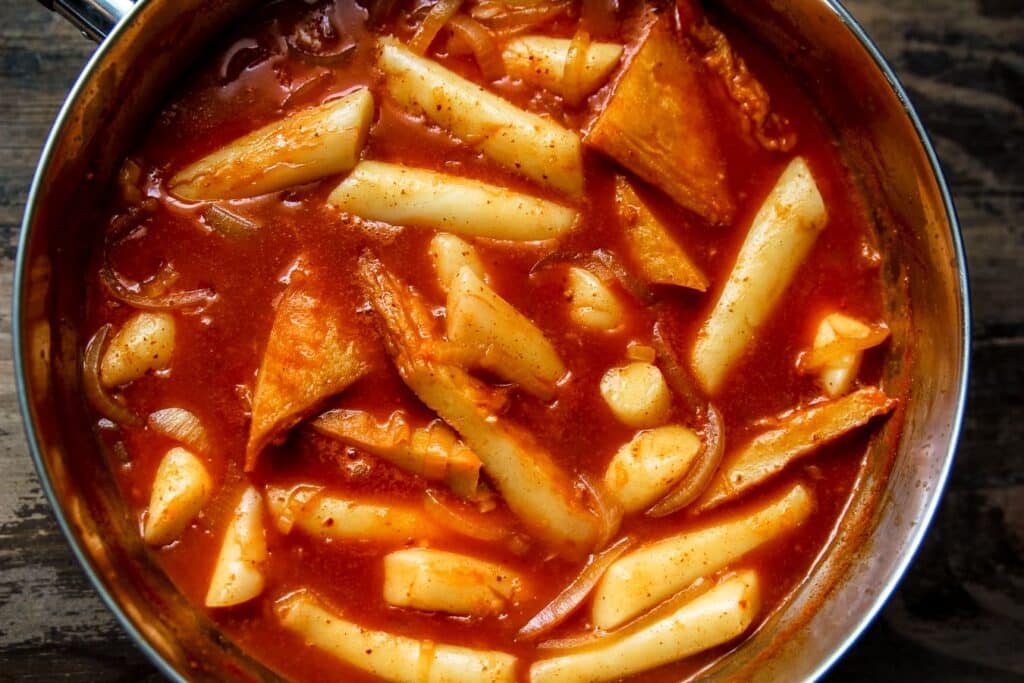 Image Credit: Pups with Chopsticks.
This is where Gochujang shines.
Gochujang is fantastic in braises, stews, and thick delicious sauces because of all the complex flavors in the concentrated paste.
If you have a tub of gochujang sitting around for a long time, this is a great way to use it. Put a big scoop into your braises, soups, and stews, and you have a complex umami flavor bomb.
It’s commonly used to make all kinds of comfort foods like Korean stews (jjigae) and soups, which are enjoyed in a piping hot earthenware bowl (ttukbaegi) that keep them bubbling hot.
Gochujang is also used to make a street food called tteokbokki which are chewy Korean rice cakes braised in a sweet and thick gochujang sauce.
It can also be incorporated into Western cooking, like hearty vegan chilies, to boost its flavor, make the flavors more well-rounded, and add depth.
4. Dipping Sauces for Vegetables and Snacks
If you like the taste of Gochujang, you can use it to create very simple and flavorful dipping sauces. Gochujang dipping sauce goes amazing with everything and is most commonly used to dip fries, onion rings, crudités (raw vegetable sticks), and burgers.
To give your gochujang dips a bit more flavor, you can add additional ingredients like garlic and onion powder, cayenne (to make it even spicier), lime/lemon juice (or rice vinegar) to give it a bit of tang, sesame oil to give it a bit of nuttiness!
5. Rice and Noodle Bowl Sauce

Bibimbap is a popular type of Korean rice bowl dish that literally translates to ‘mixing.’ These warm rice bowls are topped with seasoned and lightly sautéed vegetables, sliced meat (or vegan substitutes), and a fried vegan egg.
These beautiful rice bowls are generously drizzled with a sweet Gochujang sauce and then vigorously mixed all together and eaten right away.
Bibimbap sauces are amazing because you can make a big batch and are not limited to just bibimbap! You can use it with noodle bowls, buddha bowls, or any type of rice bowl to which you want to give a sweet and spicy kick!
6. Marinades
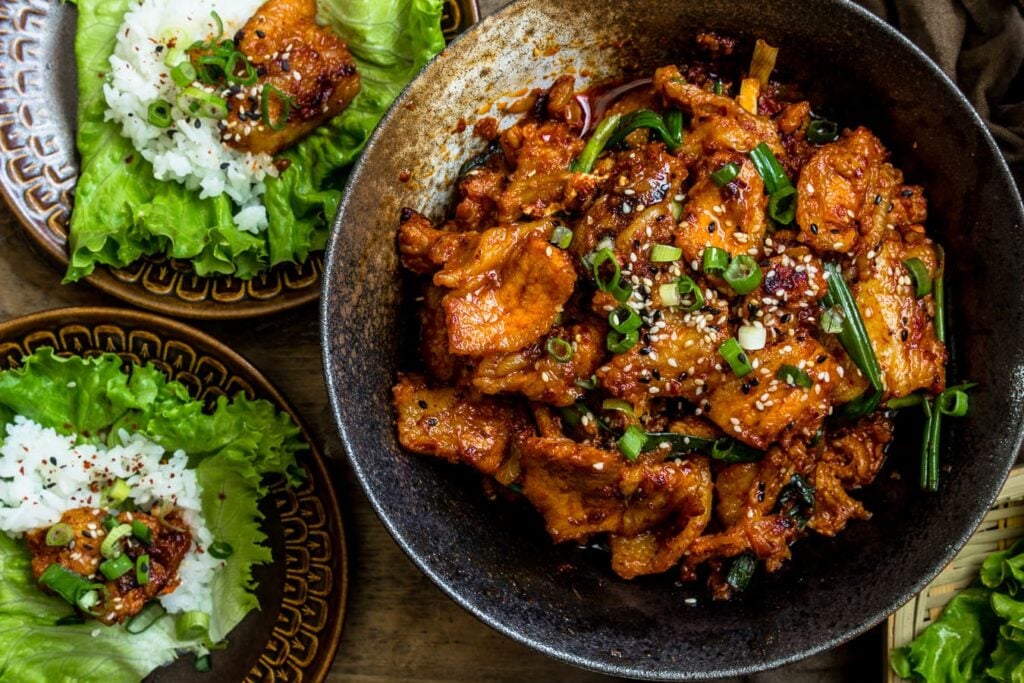 Image Credit: Pups with Chopsticks.
Since gochujang is heavy on salt, it makes a fantastic tofu marinade.
The most common way to use it as a marinade is to make spicy pork bulgogi, but there are many vegan recipes to use it.
To make a basic gochujang marinade, add a bit of acid, like rice vinegar, garlic, water, and sesame oil, and mix it with gochujang paste. Once you have a thin sauce, marinate your tofu overnight, and you’ll have a very flavorful meal the next day.
7. Stir Fries
 Image Credit: Pups with Chopsticks.
If you want a quick and easy-to-make stir-fry sauce, you definitely should consider using gochujang. It’s easy to use (just add water), and the amount of flavor in a teaspoon of gochujang paste really packs a punch. It will elevate any type of stir-fry you make with it.
All it takes is a bit of gochujang mixed with water and soy sauce combined to thick sauce consistency, and you have a ready-to-go stir-frying sauce that’s great in any fried rice like kimchi fried rice, veggie, meat, and noodle stir-fries.
How To Store Gochujang Paste?
Gochujang contains a lot of salt, so it’s one of those sauces that can last a very long time if you store it properly.
A common question everyone asks about gochujang paste is, ‘How do you store it so it doesn’t turn brown?’
Once you open the seal underneath the red lid, oxygen will start to oxidize the pepper paste. If you don’t prevent the oxidization, it will turn a dark maroon color and possibly dry out.
That said, there is absolutely nothing wrong with a maroon-colored, thick, gummier textured gochujang. It just means that it might be more concentrated, more potent, and a lot stickier. So if you want to thin it out, you will have to add a bit more water and use a bit more elbow grease to stir it into the right consistency.
To keep it as fresh as possible, once you open the seal and use the amount needed, it’s best to take a piece of plastic wrap and put it right against the paste before you close the lid. That way, no air will come in contact with the paste, keeping the paste its red color for longer, and the texture will not turn gummy and sticky.
FAQs
Although they are both spicy, that is where the commonality ends. Sriracha is a lot thinner than gochujang and has a bit more of a garlicky, savory, and vinegary flavor. In contrast, gochujang is a thicker paste with a heavier fermented soybean flavor and is a lot saltier, and has a sweet flavor as well.
Gochujang and sambal oelek are very different in flavor and are used differently. Gochujang is a thick, sweet, spicy, fermented soy chili paste that cannot be used right out of the container. It is meant to be used in cooking or made into sauces. Sambal oelek is a Thai chili garlic sauce meant to be used as a condiment straight from the jar to give your food a bit of spiciness and flavor, and it is a lot more vinegary as well.
Gochujang and gochugaru are different, but closely related. Gochugaru is a Korean chili powder used in various Korean dishes and comes in different grinds (fine, coarse, or medium). Gochujang is a sweet and spicy paste made from a fine gochugaru base.

⇒ GET OUR FREE 7-DAY VEGAN MEAL PLAN E-BOOK NOW! OR CHECK OUT ALL VEGAN MEAL PLAN RECIPES! ⇐
This article originally appeared on Wealth of Geeks.
Joyce Lee is the founder of Pups with Chopsticks, a site dedicated to Asian recipes and cooking tutorials. She believes that cooking is all about connecting with people by learning about other cultures both older and younger generations. She is a lover of all things foods and dogs, and in her spare time she loves to nerd out on videogames and boardgames. Joyce has been featured on The Toronto Guardian, Parade Magazine, Greatist, PureWOW and Well+Good
Leave a comment